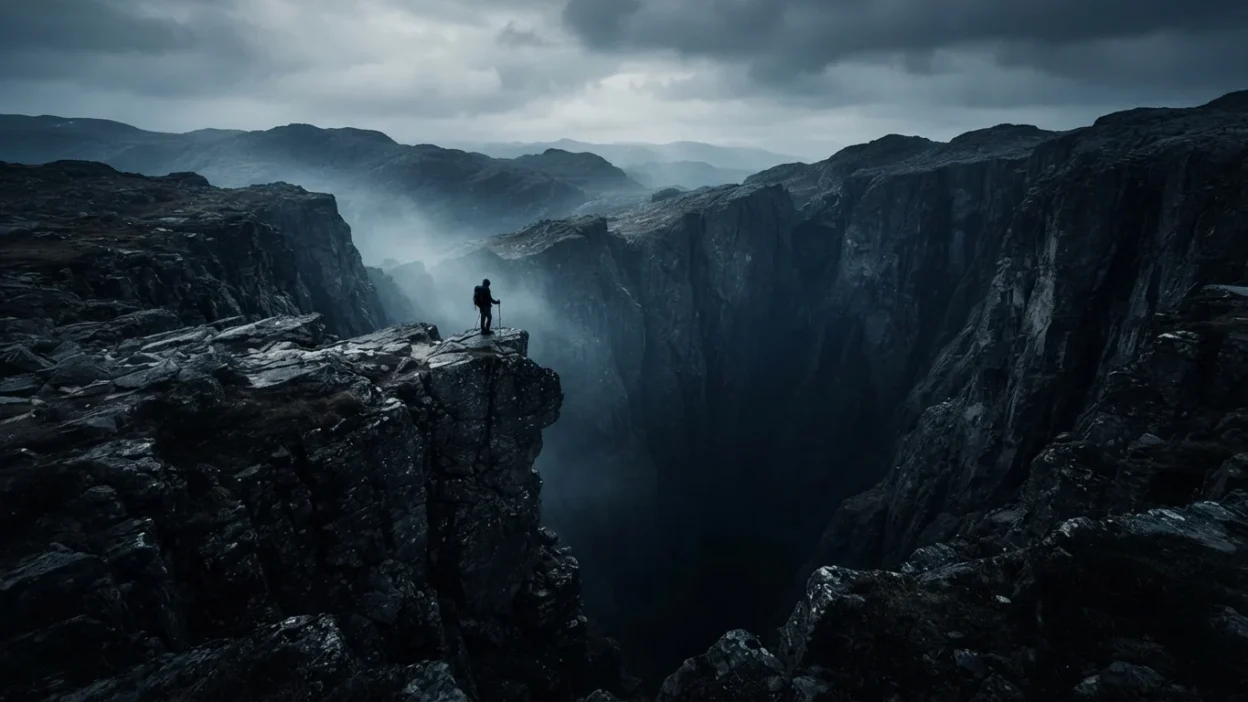
Finding the right word can make your writing clearer, stronger, and more expressive. If you are looking for synonyms for abyss, you may want words that describe a deep, seemingly endless space, a dangerous void, or even a difficult emotional or symbolic situation.
The word abyss is often used literally for a very deep or seemingly bottomless place. However, it can also describe a huge gap, a feeling of emptiness, or a situation that seems frightening or impossible to escape.
If you are a student, ESL learner, writer, or content creator, understanding the differences between similar words can help you choose the perfect term for your sentence.
What Does Abyss Mean?
Abyss means a very deep space, hole, or opening that appears to have no bottom.
For example:
- The climber looked down into the dark abyss.
- The ship disappeared into the abyss.
- She felt as though she were falling into an emotional abyss.
The word can be literal or figurative. In everyday writing, abyss often creates a strong feeling of depth, danger, emptiness, or uncertainty.
Simple Definition of Abyss
Abyss: A very deep or seemingly bottomless space, or a situation that feels extremely difficult, empty, or hopeless.
Tone and Usage
“Abyss” has a serious, dramatic, and sometimes mysterious tone. It works especially well in literature, descriptive writing, poetry, journalism, and discussions about difficult emotional experiences.
For ordinary situations, simpler words such as hole, depth, gap, or pit may sound more natural.
30 Synonyms for Abyss
The best synonym depends on what you mean by “abyss.” Some alternatives describe physical depth, while others emphasize emptiness, danger, separation, or emotional difficulty.
1. Chasm
Meaning: A very deep crack or opening in the ground.
Example: The hikers carefully crossed the narrow chasm.
Best usage: Physical landscapes and large gaps in the earth.
2. Gorge
Meaning: A deep, narrow valley with steep sides, usually formed by a river.
Example: The river flowed through a spectacular gorge.
Best usage: Nature, geography, and outdoor descriptions.
3. Ravine
Meaning: A deep, narrow valley or channel between hills.
Example: The path descended into a wooded ravine.
Best usage: Natural landscapes and geographical descriptions.
4. Crevasse
Meaning: A deep crack in ice, especially on a glacier.
Example: The explorer nearly fell into a hidden crevasse.
Best usage: Glaciers, mountains, snow, and polar environments.
5. Pit
Meaning: A deep hole in the ground.
Example: Workers discovered an old pit near the construction site.
Best usage: Simple, everyday descriptions of holes or excavations.
6. Void
Meaning: An empty space or complete lack of something.
Example: The abandoned building seemed to disappear into a dark void.
Best usage: Abstract, literary, philosophical, and emotional writing.
7. Depth
Meaning: The distance from the surface to the bottom of something.
Example: The diver could not see the depth below him.
Best usage: Water, physical measurements, and figurative descriptions.
8. Gulf
Meaning: A very large gap or difference between two things.
Example: There was a growing gulf between the two communities.
Best usage: Figurative differences, disagreements, or separation.
9. Chasmic Gap
Meaning: An extremely large or difficult-to-cross gap.
Example: A chasmic gap separated the two sides of the valley.
Best usage: Dramatic descriptive writing.
10. Hollow
Meaning: An empty or depressed area, especially in the ground.
Example: The small village rested in a quiet hollow.
Best usage: Landscapes and literary descriptions.
11. Cavity
Meaning: An empty space or hole inside something.
Example: The tree had a large cavity in its trunk.
Best usage: Scientific, medical, structural, and technical contexts.
12. Hole
Meaning: An opening or empty space in something.
Example: The workers found a deep hole beneath the old floor.
Best usage: Simple everyday English.
13. Depression
Meaning: An area of land lower than the surrounding surface.
Example: Rainwater collected in a natural depression.
Best usage: Geography and scientific writing.
14. Trench
Meaning: A long, deep, narrow cut or ditch in the ground.
Example: The team studied a deep ocean trench.
Best usage: Geography, construction, warfare, and oceanography.
15. Chasm
Meaning: A deep, wide opening or gap.
Example: A huge chasm divided the rocky landscape.
Best usage: Dramatic physical descriptions and figurative writing.
16. Precipice
Meaning: A very steep cliff or edge of a dangerous drop.
Example: They stood carefully at the edge of the precipice.
Best usage: Danger, cliffs, dramatic scenes, and figurative writing.
17. Brink
Meaning: The edge of a situation or place, especially one involving danger or major change.
Example: The company was on the brink of collapse.
Best usage: Figurative situations involving danger or major consequences.
18. Ledge
Meaning: A narrow horizontal surface on the side of a cliff or steep place.
Example: The bird landed on a narrow ledge.
Best usage: Physical places, cliffs, mountains, and buildings.
19. Abyssal Depth
Meaning: An extremely deep area, especially in the ocean.
Example: Scientists explored the mysterious abyssal depths.
Best usage: Oceans, science, exploration, and marine writing.
20. Bottomless Pit
Meaning: A hole or place that seems to have no bottom.
Example: The ancient legend described a terrifying bottomless pit.
Best usage: Fantasy, mythology, horror, and dramatic writing.
21. Chasm of Emptiness
Meaning: A figurative expression for a profound feeling of emptiness.
Example: After the loss, he felt a chasm of emptiness inside.
Best usage: Emotional and literary writing.
22. Nothingness
Meaning: A state where nothing exists or can be perceived.
Example: The character stared into the darkness and felt surrounded by nothingness.
Best usage: Philosophy, literature, poetry, and existential writing.
23. Emptiness
Meaning: A feeling or state in which something seems absent or lacking.
Example: She struggled with a deep sense of emptiness.
Best usage: Emotional and psychological descriptions.
24. Oblivion
Meaning: A state of being forgotten, destroyed, or completely unaware.
Example: The ancient city slowly disappeared into oblivion.
Best usage: Literary, dramatic, historical, and philosophical writing.
25. Darkness
Meaning: The absence of light; it can also represent fear or uncertainty.
Example: He felt as if he were descending into darkness.
Best usage: Symbolic, emotional, dramatic, and literary writing.
26. Depths
Meaning: The deepest parts of a place or situation.
Example: The submarine disappeared into the depths of the ocean.
Best usage: Oceans, caves, space, and figurative descriptions.
27. Chasm Between
Meaning: A major difference or separation between people, ideas, or groups.
Example: A wide chasm remained between their political views.
Best usage: Social, political, personal, and intellectual differences.
28. Divide
Meaning: A separation or difference between two sides.
Example: The disagreement created a deep divide within the community.
Best usage: Social issues, relationships, opinions, and organizations.
29. Gap
Meaning: An empty space or difference between two things.
Example: There was a significant gap between the two buildings.
Best usage: Everyday English, business, education, and general writing.
30. Voidness
Meaning: A state of being empty or lacking substance.
Example: The poem explores the voidness left by loss.
Best usage: Literary, philosophical, and highly abstract writing.
Quick Comparison: Which Synonym for Abyss Should You Use?
| Synonym | Best Meaning | Tone | Example Context |
|---|---|---|---|
| Chasm | Deep physical gap | Dramatic | Mountain |
| Gorge | Deep narrow valley | Neutral | Landscape |
| Ravine | Narrow deep valley | Natural | Hiking |
| Crevasse | Crack in ice | Technical | Glacier |
| Pit | Deep hole | Simple | Construction |
| Void | Empty space | Literary | Emotions |
| Gulf | Large difference | Figurative | Relationships |
| Trench | Long deep cut | Technical | Ocean |
| Precipice | Dangerous cliff edge | Dramatic | Adventure |
| Brink | Edge of danger | Figurative | Crisis |
| Nothingness | Complete emptiness | Philosophical | Poetry |
| Oblivion | Complete disappearance | Dramatic | Literature |
| Gap | Space or difference | Everyday | General writing |
| Divide | Separation | Neutral | Society |
How to Choose the Right Synonym
Choosing among synonyms for abyss becomes easier when you first decide what kind of meaning you need.
For Physical Depth
Use chasm, gorge, ravine, pit, trench, crevasse, or depths when you are describing a real physical location.
For example:
- A glacier has a crevasse.
- A river may run through a gorge.
- A deep opening in the ground can be called a pit.
- A huge crack in the landscape may be a chasm.
For Danger
Choose precipice, brink, or bottomless pit when you want to emphasize risk.
For example, “standing on the brink of disaster” sounds more figurative than simply saying someone is near a hole.
For Emotional Meaning
Use void, emptiness, darkness, nothingness, or oblivion when abyss represents an emotional or psychological state.
For example:
After the relationship ended, he felt a deep emotional void.
Here, “void” communicates emotional emptiness more naturally than “gorge.”
For Differences or Separation
Choose gulf, divide, gap, or chasm when abyss represents a major difference between people, groups, or ideas.
For example:
There was a growing gulf between the two generations.
This means the generations were becoming increasingly different or disconnected.
For Literary Writing
If you want a dramatic or poetic effect, consider:
- Abyss
- Void
- Nothingness
- Oblivion
- Darkness
- Precipice
- Bottomless pit
These words create stronger imagery than simple alternatives such as “hole” or “gap.”
Abyss vs. Chasm
Abyss and chasm are closely related, but they are not always interchangeable.
An abyss usually suggests extreme depth or something that seems bottomless. It can also have a symbolic meaning.
A chasm usually refers to a deep crack, opening, or separation. It can also describe a major difference between people or ideas.
Example:
- The diver disappeared into the abyss.
- A deep chasm separated the two cliffs.
Abyss vs. Void
An abyss often suggests depth, while a void emphasizes emptiness.
Compare:
- He stared into the abyss. → Focuses on deep darkness or depth.
- He felt a painful void inside. → Focuses on emotional emptiness.
Both words can be figurative, but void is often better for describing something that is missing.
Abyss vs. Gulf
A gulf is especially useful when describing separation or differences.
For example:
There is a gulf between the rich and poor.
You could use “chasm” in a similar sentence, but “gulf” naturally emphasizes distance or disagreement.
Common Phrases With Abyss
Learning common expressions can help you understand how native speakers use the word.
Stare Into the Abyss
This phrase means to look into something extremely deep or frightening. It is also used figuratively for confronting something disturbing or uncertain.
Fall Into the Abyss
This means to descend into a deep place. Figuratively, it can describe a person entering a difficult or hopeless situation.
Edge of the Abyss
This phrase describes being very close to danger, disaster, or a major negative change.
Into the Abyss
This expression often creates a sense of entering darkness, uncertainty, or an unknown situation.
Why Use Synonyms for Abyss?
Using different words instead of repeating “abyss” can make your writing more natural and precise.
For example, instead of writing:
The abyss was deep. The abyss was dark. The abyss frightened him.
You could write:
The enormous chasm was deep and dark. The seemingly bottomless void frightened him.
The second version gives the reader more specific imagery.
Synonyms also allow you to control the tone of your writing. “Hole” sounds simple, while “abyss” sounds dramatic. “Void” sounds abstract, while “gorge” sounds geographical.
Synonyms for Abyss in Different Writing Situations
Academic Writing
Prefer precise terms such as depth, cavity, depression, trench, or gap, depending on the subject.
Creative Writing
Words such as abyss, void, darkness, chasm, precipice, and oblivion can create stronger imagery.
Everyday English
Use simpler words such as hole, gap, depth, or pit when appropriate.
Poetry
Abstract terms such as nothingness, void, darkness, emptiness, and oblivion can communicate emotional or symbolic ideas.
Travel and Nature Writing
Gorge, ravine, chasm, precipice, and crevasse are useful when describing landscapes.
Final Thoughts
The best synonym for abyss depends on the exact meaning and tone you want to communicate. If you are describing a deep physical opening, chasm, gorge, ravine, pit, or trench may be more precise.
For figurative writing, void, emptiness, darkness, nothingness, and oblivion can express emotional or philosophical depth. When describing separation or disagreement, gulf, divide, and gap may be better choices.
The key is not simply to replace “abyss” with another word. Instead, choose a synonym that matches your meaning, audience, context, and tone. This will make your writing more accurate, varied, and engaging.

Sarah Sophia is the administrator of Biblelsays.com, a platform dedicated to Bible meanings and explanations, where she helps manage content, organization, and educational resources for readers seeking spiritual understanding online.